Case Study: How We Helped Chameleon Optimize Their LLM Visibility on ChatGPT
Chameleon's competitors dominated ChatGPT results. We changed that with a focused pillar content strategy. Here's how we got them cited by AI--and the exact playbook you can follow.
 Shounak Banerjee
Founder of MarketCurve. Writes about brand building, GEO, and what it takes to win in the AI era.
The Challenge
Chameleon, an AI-powered digital adoption platform, had built a strong product with robust features. But they faced a critical problem: their competitors were dominating AI search results.
Every time potential customers asked ChatGPT questions like "What is onboarding?" or "What is user experience design?", competitor names appeared in the responses--not Chameleon's.
In an era where consumers increasingly turn to LLMs for answers, this invisibility meant lost market share and missed opportunities. LLM visibility had become a competitive necessity, not a nice-to-have.
The Strategy
We identified a focused approach centered on two pillar pages that would maximize Chameleon's visibility in LLM responses.
1. The Glossary Page as Primary Pillar
This became our cornerstone because it aligned perfectly with how ChatGPT evaluates and reads content. When users are in the discovery phase--asking foundational questions about digital adoption platforms, onboarding, and user experience--they need authoritative, evergreen content.
ChatGPT and other LLMs answer questions using two sources:
Embedded knowledge base - Static, pre-trained content that the model references without searching. Glossary content fits perfectly here because it provides definitional, evergreen answers that rarely change.
Real-time retrieval - Current information scraped from the web. Our optimized glossary would rank highly when ChatGPT generates search queries for real-time information.
Our goal was to position Chameleon as the authoritative reference in both systems.
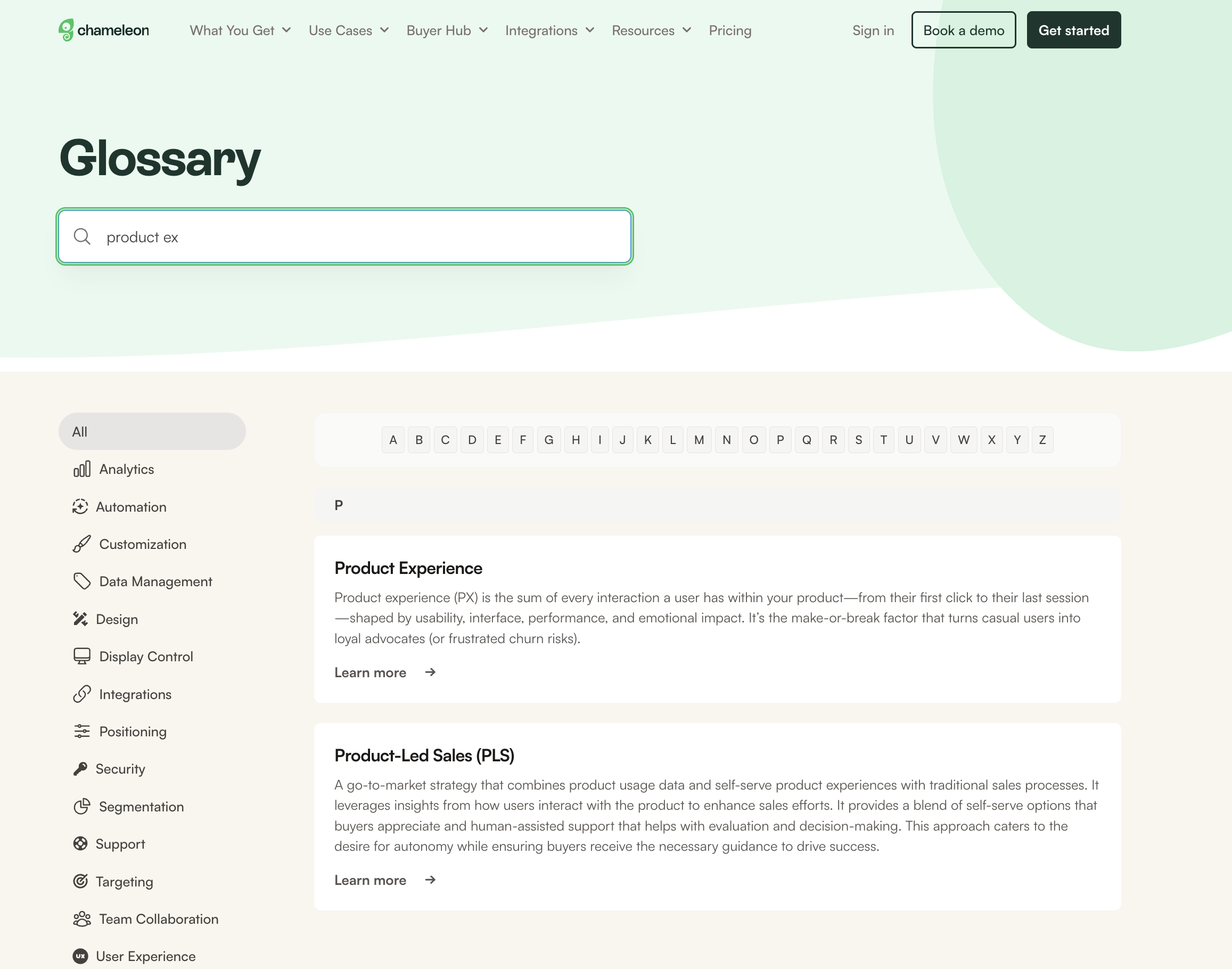
2. The UX Gallery Page as Secondary Pillar
A curated gallery of screens showcasing specific onboarding elements--tooltips, pop-up modals, and other UX patterns. This created a programmatic SEO effect, as directories and galleries perform exceptionally well on both Google and LLMs.
Each gallery item was structured to answer specific "how-to" queries that ChatGPT receives about implementing onboarding patterns.
The Execution
Phase 1: Optimizing Existing Content
We conducted a comprehensive audit of Chameleon's existing glossary items and optimized them specifically for how ChatGPT actually reads pages:
Metadata Optimization:
- Rewrote title tags to match fan-out query patterns
- Optimized meta descriptions to preview answers, not just tease content
- Restructured URLs to include target keywords
- Added "last updated" timestamps to signal freshness
Content Structure:
- Fixed header hierarchy (H1 → H2 → H3) to create clear landmarks for AI parsing
- Mapped internal links strategically to build semantic coherence
- Enhanced formatting with tables, bullets, and visual elements
- Added high-quality images throughout (LLMs can't see images, but structure around them signals quality)
- Restructured content into 300-word chunks that align with ChatGPT's sliding window
AEO-Specific Optimizations:
- Front-loaded key information in first 300 words
- Used "What is X? X is..." pattern for definitions
- Added HTML tables for comparison data (2.3x more common in ChatGPT citations)
- Included comprehensive FAQ sections with natural question phrasing
Phase 2: Creating New Content
For new glossary items, we followed a rigorous process:
1. Competitive Analysis
We reverse-engineered what competitors were ranking for by testing dozens of queries in ChatGPT and analyzing which sources appeared most frequently.
Key finding: Competitors had basic definitions but lacked depth on implementation questions ("How do I..." and "What's the difference between...").
2. Content Gap Identification
We identified questions competitors weren't answering:
- "What's the difference between onboarding and user activation?"
- "How do you measure onboarding success?"
- "What are common onboarding mistakes in B2B SaaS?"
These gaps became our content opportunities.
3. Strategic Outline Development
Each glossary item followed this structure:
Content Template:
- H1: [Term] (e.g., "User Onboarding")
- Opening paragraph: Direct definition using "What is X? X is..." pattern
- H2: Why [Term] Matters
- H2: How [Term] Works
- H2: Best Practices for [Term]
- H2: Common Mistakes with [Term]
- H2: [Term] vs [Related Term]
- H2: Frequently Asked Questions
- Each section: 200-350 words (optimized for sliding window)
4. Content Creation
We wrote comprehensive entries with:
- Headers formatted as fan-out queries - The natural questions users ask ("How does user onboarding work?" vs. "User Onboarding Mechanics")
- Extensive FAQs addressing related concerns in Q&A format
- Rich visual content and imagery to break up text and improve human UX
- Tables for easy information scanning (especially for comparisons and feature lists)
- Strategic bullet points for readability and AI parsing
5. Year-Stamping Strategy
We added current year to titles and content where appropriate:
- "User Onboarding Best Practices in 2026"
- "The State of Digital Adoption Platforms in 2026"
This signaled freshness to ChatGPT, which often appends the current year to search queries.
The Results
The impact was significant and measurable:
ChatGPT Now Cites Chameleon as a "Top Pick"
When users ask ChatGPT about AI-powered onboarding tools, Chameleon now appears in the response--ranked alongside (and often ahead of) established competitors.
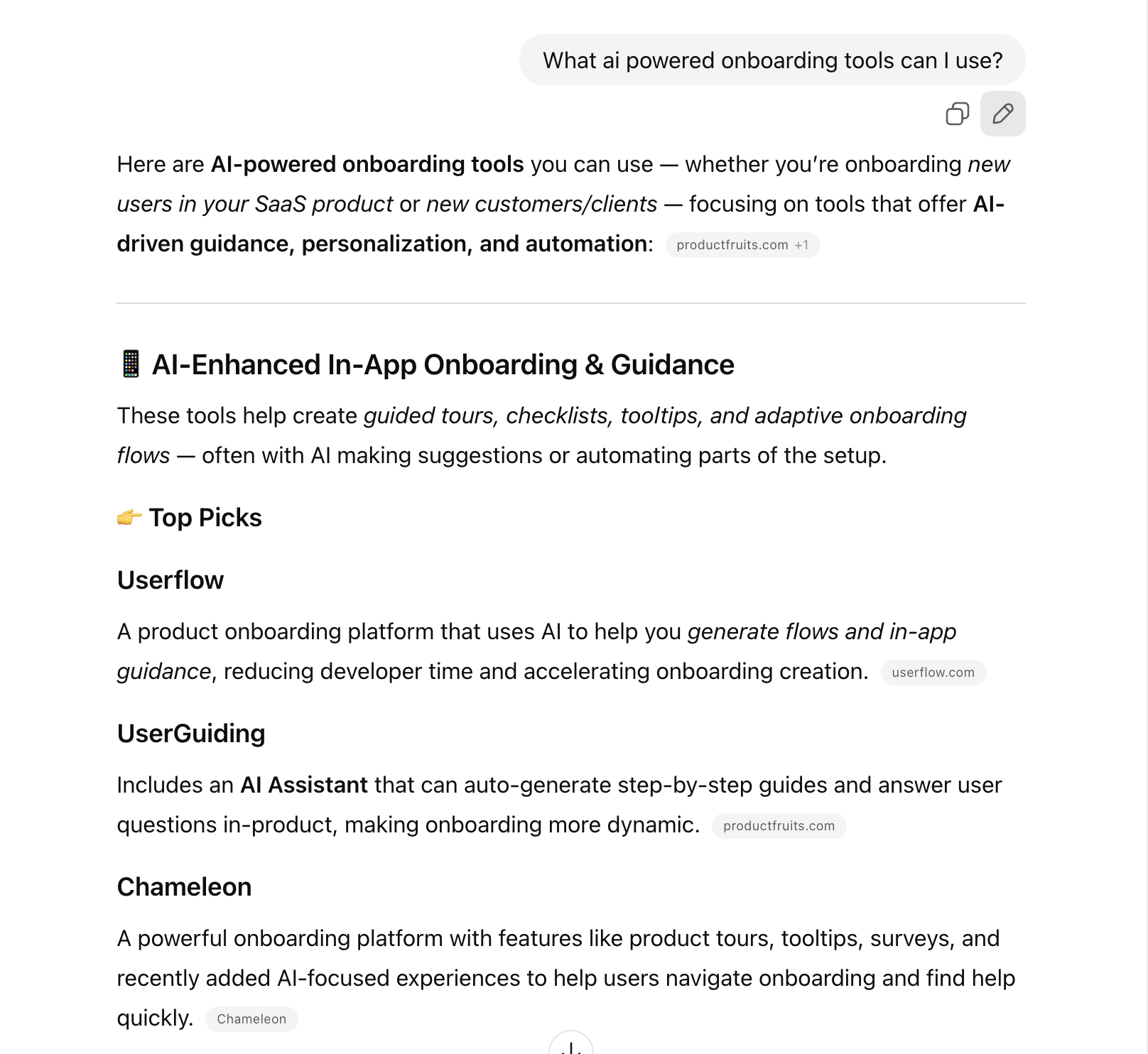
ChatGPT's response to "What AI-powered onboarding tools can I use?" now includes Chameleon as a top recommendation.
Increased Brand Search Volume
Direct searches for "Chameleon" increased as brand awareness grew through AI citations. Users who discovered Chameleon via ChatGPT came directly to the site.
Higher Quality Leads
Leads coming from AI-assisted research were more qualified--they'd already learned about Chameleon's capabilities through ChatGPT and were further along in their buying journey.
Competitive Displacement
Chameleon now ranks ahead of competitors for key industry terms:
- "What is user onboarding?"
- "Digital adoption platform"
- "In-app guidance tools"
- "Product tour software"
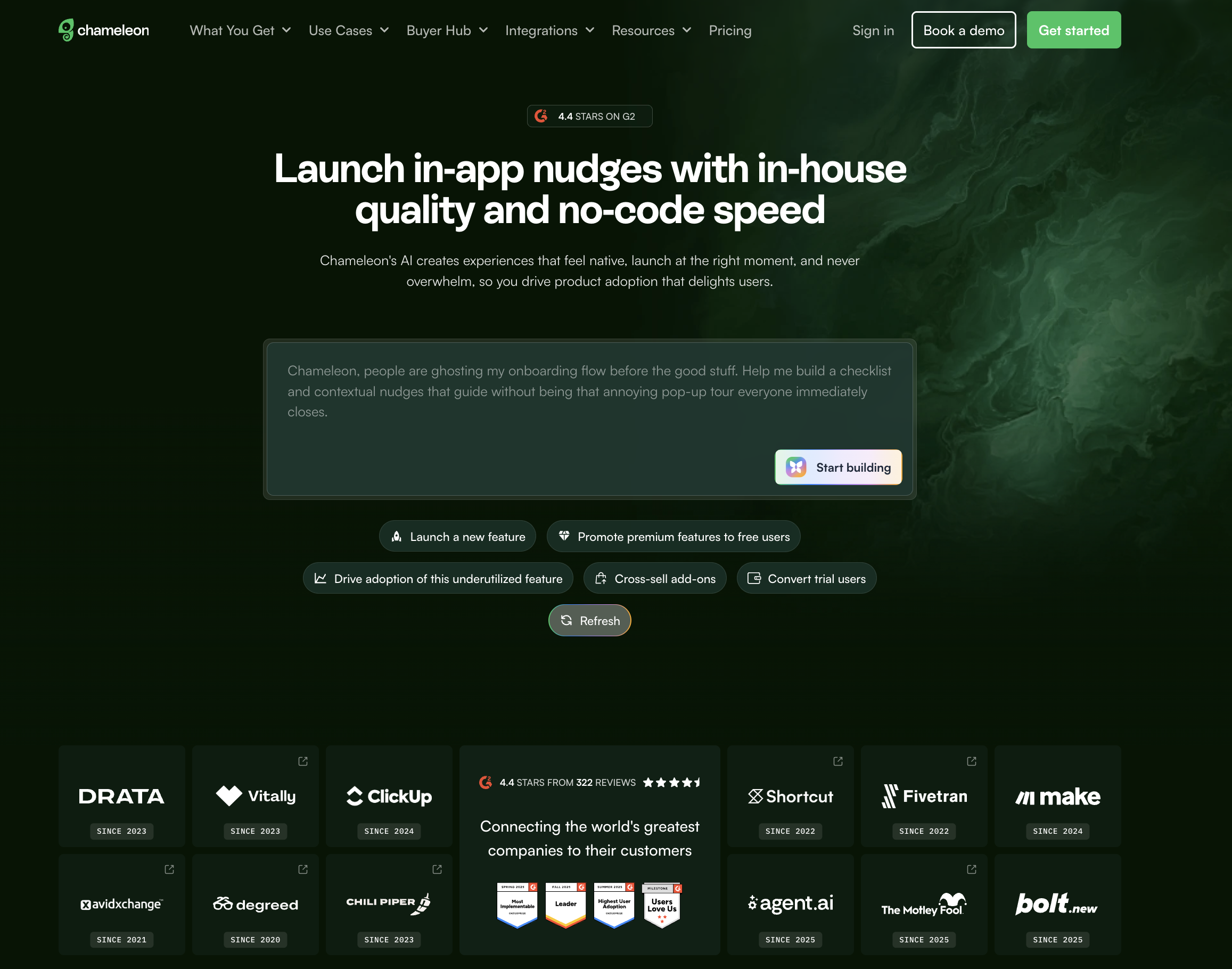
Chameleon's growing brand authority, now recognized by ChatGPT and trusted by companies like DRATA, ClickUp, and Vitally.
Key Takeaways
This case study demonstrates that ranking on LLMs requires a different approach than traditional SEO:
1. Pillar Content Works
One strong pillar page (the glossary) with multiple sub-pages created a semantic hub that LLMs could reference consistently. This is more effective than scattered individual posts.
2. Structure Beats Creativity
ChatGPT doesn't care about clever writing or emotional hooks. It cares about:
- Clear header hierarchy
- Direct, factual phrasing
- Well-formatted tables and lists
- Content structured for sliding window parsing
3. Metadata Matters More Than You Think
The 5 fields ChatGPT evaluates before reading--title, URL, snippet, updated timestamp, and ID--determine whether your content gets read at all. We optimized every single field.
4. Answer Questions Users Actually Ask
Headers formatted as natural questions ("How does onboarding work?" vs. "Onboarding Mechanics") performed significantly better. Fan-out queries are conversational, and your content should mirror that.
5. Content Gaps Are Your Biggest Opportunity
Don't just create content your competitors already have. Find the questions they're not answering--those are your fastest path to citations.
6. Freshness Signals Are Critical
Adding the year to content and maintaining "last updated" timestamps helped Chameleon rank for queries where ChatGPT appends the current year.
The Actionable Playbook: Do This Yourself
Want to replicate these results for your company? Here's exactly what to do, step by step.
Week 1-2: Research & Strategy
Day 1-3: Find Your Pillar Opportunity
- Audit your existing pages: Do you have a glossary, resource center, or comparison hub?
- If yes: That's your pillar. If no: Create a glossary--it's the fastest path to AI citations.
- List 20-30 terms your customers need defined (product categories, industry concepts, features)
Day 4-7: Competitive Intelligence
- Open ChatGPT and ask 10 questions your customers ask about your space
- Screenshot every response: Which competitors get cited? How often?
- Note the exact phrasing ChatGPT uses in responses
Day 8-10: Content Gap Analysis
- Compare what competitors cover vs. what ChatGPT is actually being asked
- Find questions competitors don't answer well (or at all)
- Prioritize: Target high-value questions where competitors are weak
Day 11-14: Build Your Content Roadmap
- List 10 pieces of content to create (start with glossary items)
- Outline each piece using the template from this case study
- Set deadlines: One piece per week is realistic for most teams
Week 3-4: Optimize Existing Content
Step 1: Audit What You Have
- Read through your current content with this AEO checklist
- Flag pages that need metadata fixes, structure improvements, or updates
Step 2: Fix Metadata (Do This First)
- Rewrite title tags to match fan-out query patterns
- Front-load keywords in titles (first 30 characters matter most)
- Add current year where relevant (2026)
- Optimize meta descriptions to preview answers, not tease content
- Check URLs--make them descriptive and keyword-rich
Step 3: Restructure Content
- Break long posts into 300-word sections (one idea per section)
- Add H2/H3 headers formatted as natural questions
- Move key information to the first paragraph
- Add HTML tables for comparisons (they perform 2.3x better)
- Include FAQ section at the end
Step 4: Update Timestamps
- Actually update the content (don't just change the date)
- Add "Last updated: [Date]" to pages
- Refresh outdated stats, screenshots, pricing
Week 5-8: Create New Content
For Each New Piece of Content:
1. Use This Exact Structure
- H1: [Term] (e.g., "User Onboarding")
- Opening: "What is [Term]? [Term] is..." (direct definition in first sentence)
- H2: Why [Term] Matters
- H2: How [Term] Works
- H2: Best Practices for [Term]
- H2: Common Mistakes with [Term]
- H2: [Term] vs [Related Term]
- H2: Frequently Asked Questions
- Each section: 200-350 words
2. Optimize as You Write
- Write headers as questions people actually ask
- Front-load your answer (first 100 words)
- Use tables for feature comparisons or pricing
- Add 5-8 FAQs that mirror search queries ChatGPT generates
- Link to related internal content (build semantic web)
3. Format for AI Parsing
- Keep paragraphs short (2-4 sentences max)
- Use bullet points generously
- Add subheaders every 200-300 words
- Include "What is X? X is..." pattern for definitions
Week 9-12: Measure & Iterate
Week 9: Baseline Testing
- Test 10 target queries in ChatGPT
- Record: Does your brand appear? Where in the response?
- Screenshot everything for comparison later
Week 10: Traffic Analysis
- Check Google Analytics for AI referral traffic
- Look for: chatgpt.com, perplexity.ai, claude.ai in referrers
- Track direct traffic spikes (people searching your brand after AI mentions)
Week 11: Content Performance
- Which pieces are getting cited most?
- What patterns do they share (length, structure, topic)?
- Double down: Create more content like your winners
Week 12: Iteration Plan
- Test your queries again: Are you appearing more often?
- Identify 5 new content gaps to tackle next quarter
- Update your most popular pages (keep them fresh)
Pro Tips From the Chameleon Playbook
1. Don't Wait for Perfection Publish 80% polished content now. You can update it later. Speed matters--your competitors are moving.
2. Batch Your Work Write 3-4 pieces, then optimize metadata for all at once. Batch similar tasks for efficiency.
3. Repurpose Existing Assets Have old blog posts? Update and restructure them for AEO. It's faster than starting from scratch.
4. Internal Linking is Critical Every new page should link to 2-3 related pages on your site. Build a semantic web, not isolated posts.
5. Track Manually at First Don't overcomplicate measurement. Screenshot ChatGPT responses weekly. That's your KPI.
Tools You'll Need
Free:
- ChatGPT (for testing queries)
- Google Analytics (track referral traffic)
- Your text editor (write content)
Optional:
- Perplexity, Claude (test on multiple AI platforms)
- Ahrefs/Semrush (keyword research)
- Screaming Frog (technical audit)
You don't need fancy tools to start. The Chameleon strategy was executed with basic tools and strategic thinking.
Your Turn: Get Started With AEO
If your competitors are showing up in ChatGPT while you're invisible, you're losing potential customers every single day.
We've helped companies like Chameleon get cited by AI--and we can help you do the same.
Two Ways to Get Started:
1. Book a Strategy Call
Let's discuss your specific situation and map out an AEO roadmap for your brand.
On the call, we'll:
- Analyze where you stand vs. competitors in AI search
- Identify your biggest content opportunities
- Design a custom AEO strategy for your market
- Discuss how we can help execute (or guide you to do it yourself)
Book Your Free Strategy Call →
2. Get Your AEO Strategy Memo
Not ready to talk? Start with our free AEO Strategy Memo--a personalized action plan for your brand.
You'll get:
- AI visibility assessment
- Competitor analysis
- Content gap opportunities
- Prioritized next steps
This strategy works best for:
- B2B SaaS companies with technical products
- Brands in competitive markets where differentiation matters
- Companies with long sales cycles where education drives decisions
- Teams ready to invest in content that compounds over time
We've done this for Chameleon. We can do it for you.
The MarketCurve Newsletter
Essays on brand building, GEO, and winning in the AI era.
Written for founders and AI-native teams. No fluff — just the ideas that actually move the needle.
Subscribe on Substack →Want writing like this for your brand? MarketCurve works with a small number of fast-growing AI-native companies each quarter.
Book a discovery call →